
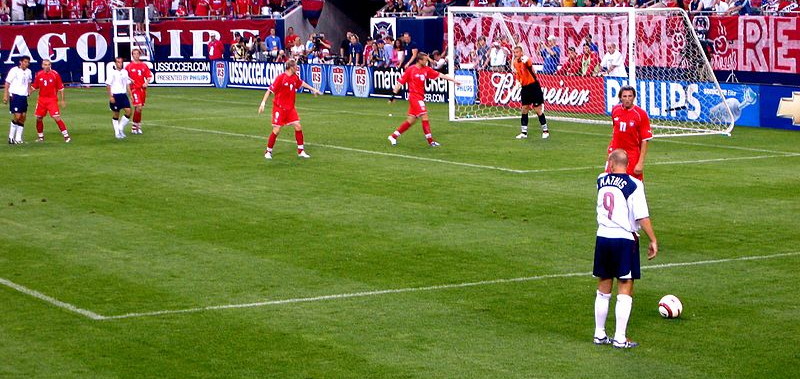
Free kicks are essential in football, providing teams with chances to score or restart play following a foul. There are two main types of free kicks, Direct free kicks and Indirect free kicks. Fouls reward both, but they are significantly different in how they can be executed and in the situations in which they are awarded.
Direct Free Kicks
A foul committed by a player grants a direct free kick. This kick enables the opposing team to shoot directly at the goal, capitalizing on scoring opportunities.
When Awarded
Direct free kicks are awarded for serious fouls, including:
- Foul Play: This includes actions like tripping, pushing, or holding an opponent. When tripped inside the penalty area by a defender, the attacking team is awarded a direct free kick.
- Handball: A direct free kick is given to the opposing team if the ball is deliberately handled by a player.
- Risky Play: Dangerous actions like high kicks near an opponent’s head can result in a direct free kick.
- Violent Conduct: A direct free kick is typically awarded for actions involving excessive force, such as tackling from behind.
Goal Scoring
A key feature of a direct free kick is the kicker’s ability to score directly from it. The goal is considered valid if the ball is kicked into the net without making contact with another player. Direct free kicks are exciting, especially when taken by skilled players who can accurately aim and power their shots.
Indirect Free Kicks
An indirect free kick requires the ball to be touched by another player before a goal can be scored. An indirect free kick is signaled by the referee raising one arm until the ball is touched by another player.
When Awarded
Indirect free kicks are given for fouls considered to be less serious, such as:
- Offside: If a player is in an offside position and becomes involved in active play, the opposing team is awarded an indirect free kick.
- Fouls without Contact: Actions that don’t involve physical contact, such as dangerously playing the ball (like kicking the ball too high near an opponent), can lead to an indirect free kick.
- Goalkeeper Violations: Goalkeeper violations, like holding the ball too long or an improper goal kick, can result in an indirect free kick.
- Injury or Disruption of Play: An indirect free kick is awarded to the uninvolved team if the game is interrupted by injury.
Goal Scoring
A defining aspect of an indirect free kick is that a goal cannot be scored directly from it. The ball must be touched by another player before it can cross the line for the goal to be valid. This rule requires strategic gameplay and collaboration to create a scoring chance after an indirect free kick.
Key Differences
- Execution: A direct free kick allows the kicker to shoot directly at the goal, while an indirect free kick requires the ball to touch another player first.
- The seriousness of the Foul: Direct free kicks are typically awarded for more severe infractions, whereas indirect free kicks are given for less serious violations or technical infractions.
- Goal Scoring: A goal can be scored straight from a direct free kick, whereas it cannot be scored directly from an indirect free kick.
Strategic Implications
Understanding the differences between direct and indirect free kicks is vital for players and coaches when devising strategies.
- Direct Free Kicks: Teams often position their best free-kick takers to maximize their chances of scoring from these opportunities. Set pieces, like training specific formations to take advantage of direct free kicks, can be a crucial part of a team’s offensive strategy.
- Indirect Free Kicks: Teams might employ varied tactics, such as quick passes or well-coordinated runs, to confuse the defense and create openings. Coaches might practice specific patterns for indirect free kicks to enhance scoring chances.
Conclusion
In summary, direct and indirect free kicks are fundamental aspects of football that serve different purposes and arise from various game situations. Direct free kicks allow immediate scoring opportunities, while indirect free kicks require teamwork and strategic execution. Understanding these differences is essential for appreciating the game’s nuances and enhances players’ and fans’ enjoyment of football.