
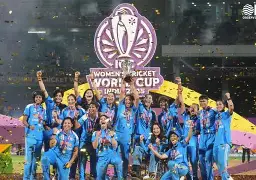
Over the past few years, Indian cricket has witnessed a remarkable shift — one that extends far beyond stadiums and scoreboards. The rise of women’s cricket in India has not only transformed how the game is played but also how it is perceived, celebrated, and supported across the country. From record-breaking viewership numbers to the emergence of grassroots programs for girls, women’s cricket is reshaping the nation’s sporting identity.
1. Breaking Barriers, Building Dreams
For decades, cricket was seen as a male-dominated sport in India. But with icons like Mithali Raj, Jhulan Goswami, Harmanpreet Kaur, and Smriti Mandhana, that perception has changed. Their leadership, discipline, and world-class performances have inspired thousands of young girls to pick up the bat and ball — not as a hobby, but as a serious career.
The success of the Indian women’s team in international tournaments, including their recent World Cup victory, has proven that Indian women can perform at the highest level under pressure. This has created a sense of pride and possibility among young athletes and their families.
2. The WPL Effect
The launch of the Women’s Premier League (WPL) has been a game-changer. It has provided professional contracts, global exposure, and financial independence for players, elements that were long missing in the women’s game. Young players now see a clear path from academy-level cricket to professional stardom, just as their male counterparts do in the IPL.
More importantly, the WPL has brought women’s cricket into mainstream media, creating heroes, fan bases, and commercial opportunities. Seeing packed stadiums and televised matches sends a strong message: cricket is not gendered — it’s talent-driven.
3. Shifting Mindsets Across Generations
In small towns and cities alike, parents are now encouraging daughters to join cricket academies, something that was rare a decade ago. The visibility of women cricketers on TV, social media, and brand campaigns has normalized the idea of girls excelling in sports.
This change isn’t just cultural; it’s structural. Many schools and academies have started introducing separate coaching programs for girls, hiring female coaches, and organizing inter-school tournaments specifically for women’s teams.
4. Economic and Social Impact
The rise of women’s cricket also carries economic and social significance. Sponsorships, brand endorsements, and media coverage have increased dramatically, turning women’s cricket into a viable profession. Moreover, it promotes gender equality and challenges stereotypes about women in sports.
For cricket academies and coaches, this evolution means greater inclusivity and a broader talent pool. Training young girls not only adds diversity to the sport but also strengthens its future in India.
5. The Road Ahead
Women’s cricket in India has grown immensely, yet better facilities, equal pay, and exposure are needed as it becomes a powerful force shaping the sport’s future.
Conclusion:
The rise of women’s cricket in India is more than a sporting achievement — it’s a social revolution. It’s changing how we view opportunity, talent, and success. Every young girl with a bat has a place in Indian cricket.